
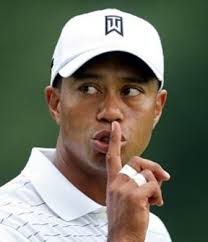
 My district is seriously looking into standards-based grading. I have dabbled in it and see both the value and the pitfalls. Interestingly, I wrote the article below in 2002, long before SBG came into vogue and before the Common Core started flirting with Performance Tasks. While Tiger may not be the top golfer in the world anymore, it speaks directly to my hopes and concerns. I invite some push back here from the SBG gurus.
***********************************************************
Earl Woods? Hello sir, thank you for coming to my classroom to speak with me about your son Tiger. Yes sir, I know that he appears to be doing well at home, but Mr. Woods, to be honest with you, Tiger is in danger of failing golf.
Currently his grade is a C-. I can show you the grade breakdown if you like. Certainly. As you know, there are approximately two hundred professional golfers. Each is ranked in various skill categories. Your son, Tiger, ranks as follows.
| Driving Distance | 2nd |
| Driving Accuracy | 72nd |
| Greens in Regulation | 1st |
| Putting Avg. | 159th |
| Eagles | 132nd |
| Birdies | 2nd |
| Scoring Avg. | 1st |
| Sand Save Avg. | 4th |
As you can see, Tiger does very well in most skill categories, but appears to perform poorly in two. Now, failing in two out of the eight leaves him with a score of 75%. There is a third category in which he is only slightly above average; therefore, he only gets partial credit. This diminishes his seventy-five percent to a 70%, and thus, he gets a C-.
My concern is that if Tiger were to falter in any one of these eight categories, he would surely fail golf. However, there is plenty of room for him to improve in these problem areas. He has an excellent work ethic, so I am confident that with a little more effort, Tiger will succeed. Mr. Woods, thank you for your support in this matter.
Can you imagine ever having this conversation regarding Tiger Wood’s ability as a golfer? How does the best golfer in the world get a near failing grade in golf? The answer is in the assessment.
The rankings given in the previous scenario are true. Furthermore, from this list, the All-Around Rankings of each professional golfer is determined by adding the golfer’s relative rank in each category. The lower the score, the better. Adding Tiger’s categorical rankings places him 10th in the “All-Around Rankings.”
In other words, there supposedly are nine other golfers in the world better skilled than Tiger Woods. Being in the top five percent of all golfers in the overall skill category would certainly raise his grade in golf to at least a B, if not an A. However, he still does not rank as the top All-Around player in the world.
If we change the assessment, though, Tiger fares much better. For instance, Tiger is the richest golfer in the world. He is number on in season earnings and is the all-time career money winner. His is also number one in the World Rankings. The World Rankings are based on how well a golfer finishes in tournament play in comparison with the strength of the field. In other words, how well does the golfer compete?
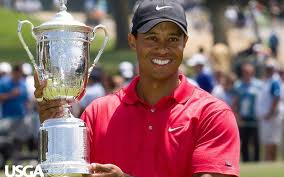
Tiger wins the most tournaments and wins the most money. In my mind, and that of many others, that makes Tiger the bets golfer n the world. Yet, I am basing my opinion on his performance as a golfer rather than his skill as a golfer. Analyzing two other golfers can show the difference between the value of skill and that of performance. Do the names Cameron Beckman or John Huston ring a bell to you? No? Me, neither, and I am an avid golf fan. The reason that you do not know these names is that these two people are average golfers in the World Rankings. (They don’t win much.) Yet, they both outrank Tiger in the All-Around (2nd and 9th respectively). According to certain forms of assessment, Beckman and Huston are better than Tiger Woods.

We can see this scenario being played out in our classrooms. The Beckmans and Hustons get higher grades than the Tiger Woods, because too much of our assessment is based on individual skill rather than on mathematical ability. The Tigers excel in the performance assessments that we occasionally offer, but these are so out weighed by itemized tests that the All-Around Ranking (skill) wins out over the World Ranking (performance),
A more appropriate balance of skills, testing and performance assessment in our classes may send our most underachieving mathematicians to the head of the class.
 Imagine a small box with an American flag painted on each side. This represents the box in which we American teachers think about education … how we view the role of the teacher, the nature of the learner and the purpose of school. I say this, because ongoing international research studies show that teaching is a cultural phenomenon. We do not teach the way we were trained to teach; we teach the way we were taught. While there are differences among us American teachers, there are glaring commonalities that we uniquely share. The same can be said for our counterparts abroad. We could make a similar box and cover it with French flags and have a conversation about how French teachers think about education. We could do the same for the Japanese or any country for that matter. The issue is that while our education system has a few great things to share with world, for the most part, countries which outperform us in academic math tests do so because their box is far superior to ours.
 The Math Projects Journal